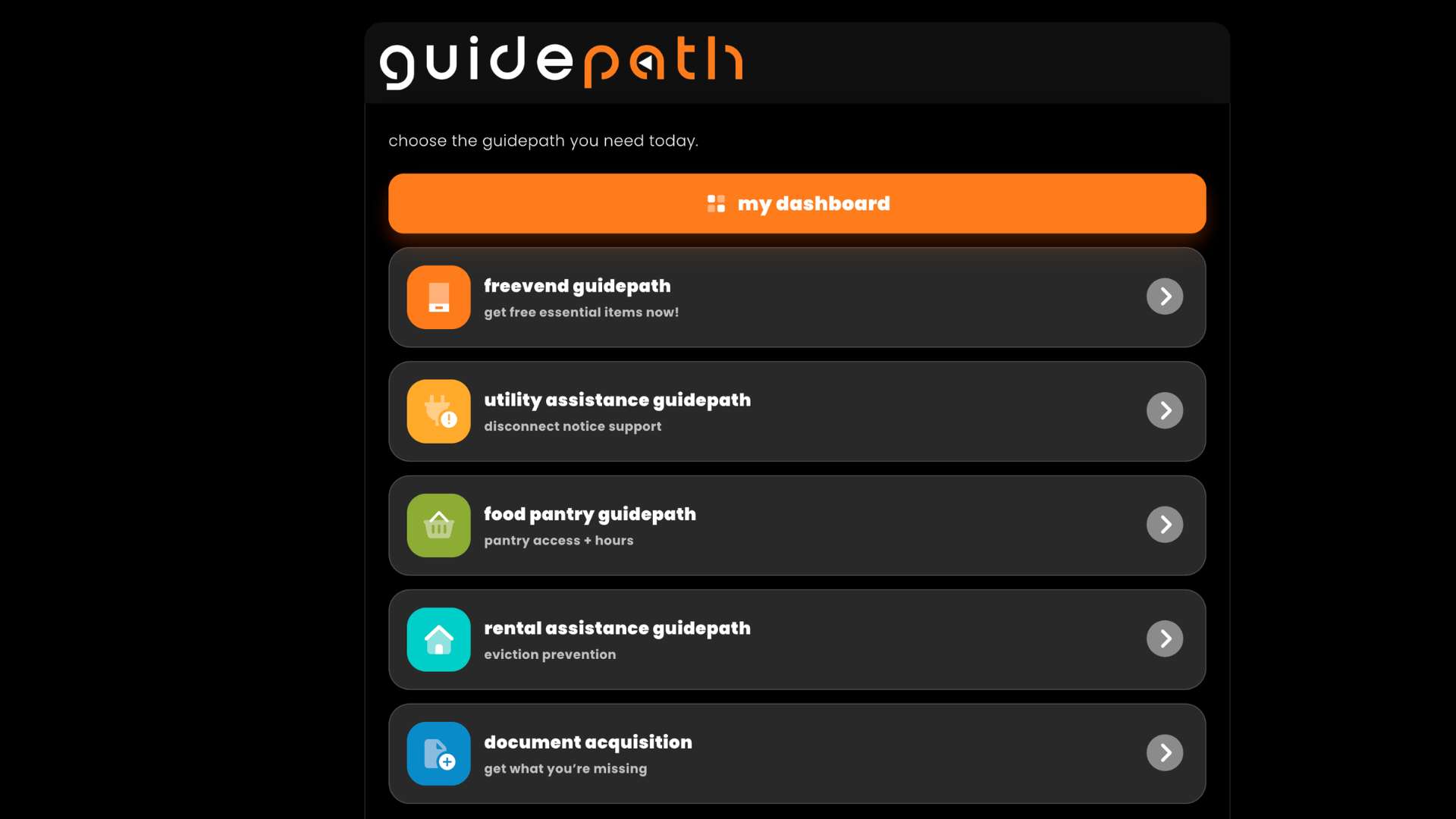
guidepath is a human-centered service navigation platform that helps people find assistance, complete applications, submit documents, track progress, and understand what happens next.
powered by guidepath os, every process is designed around one clear standard: no human process should exceed 10 steps before service delivery.
instead of sending guests through disconnected websites, phone numbers, offices, forms, and repeated handoffs, guidepath creates one clear path from need to support.
guidepath os is the operating system behind the guidepath platform.
it helps organizations examine, simplify, and redesign service-delivery processes so people can reach support in 10 steps or fewer.
every workflow is built to reduce unnecessary requirements, duplicate requests, avoidable delays, and administrative friction. when a process becomes too complicated, guidepath redesigns the process not the person trying to navigate it.
guidepath os ensures that no human process exceeds 10 steps before service delivery.
each workflow is evaluated from the guest’s perspective and simplified to create the shortest clear path between identifying a need and receiving support.
the 10-step standard helps organizations:
the guidepath platform combines guided digital workflows, document collection, application tracking, automated updates, staff review tools, referrals, reporting, and optional guideflow kiosks.
each workflow can be customized around a partner’s programs, eligibility rules, required documents, approval process, service area, and available resources.
guidepath can support services such as:
guests follow one clear path.
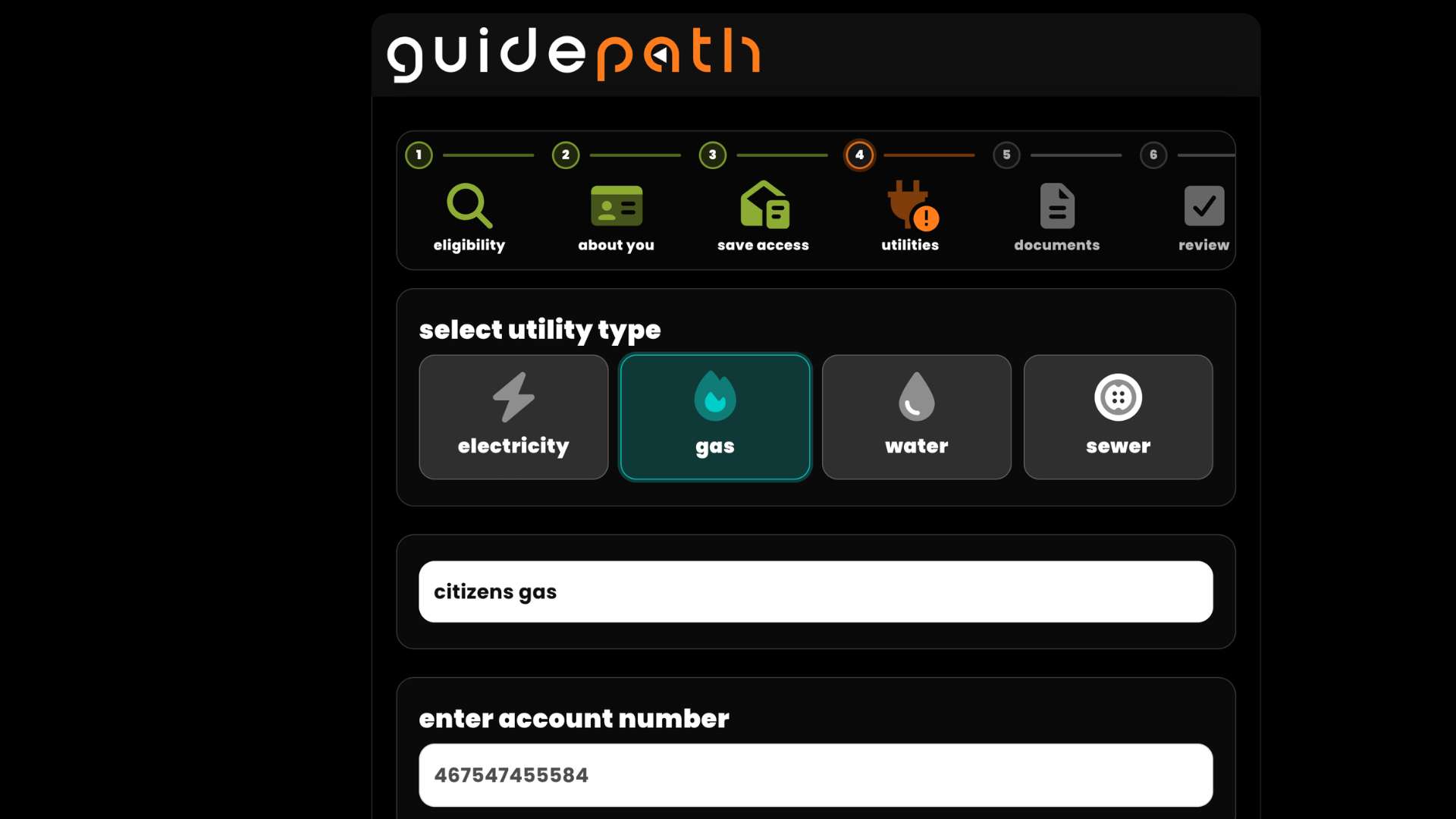
guests answer simple questions that guide them toward the right application, referral, resource, or next step.
guidepath can help guests:
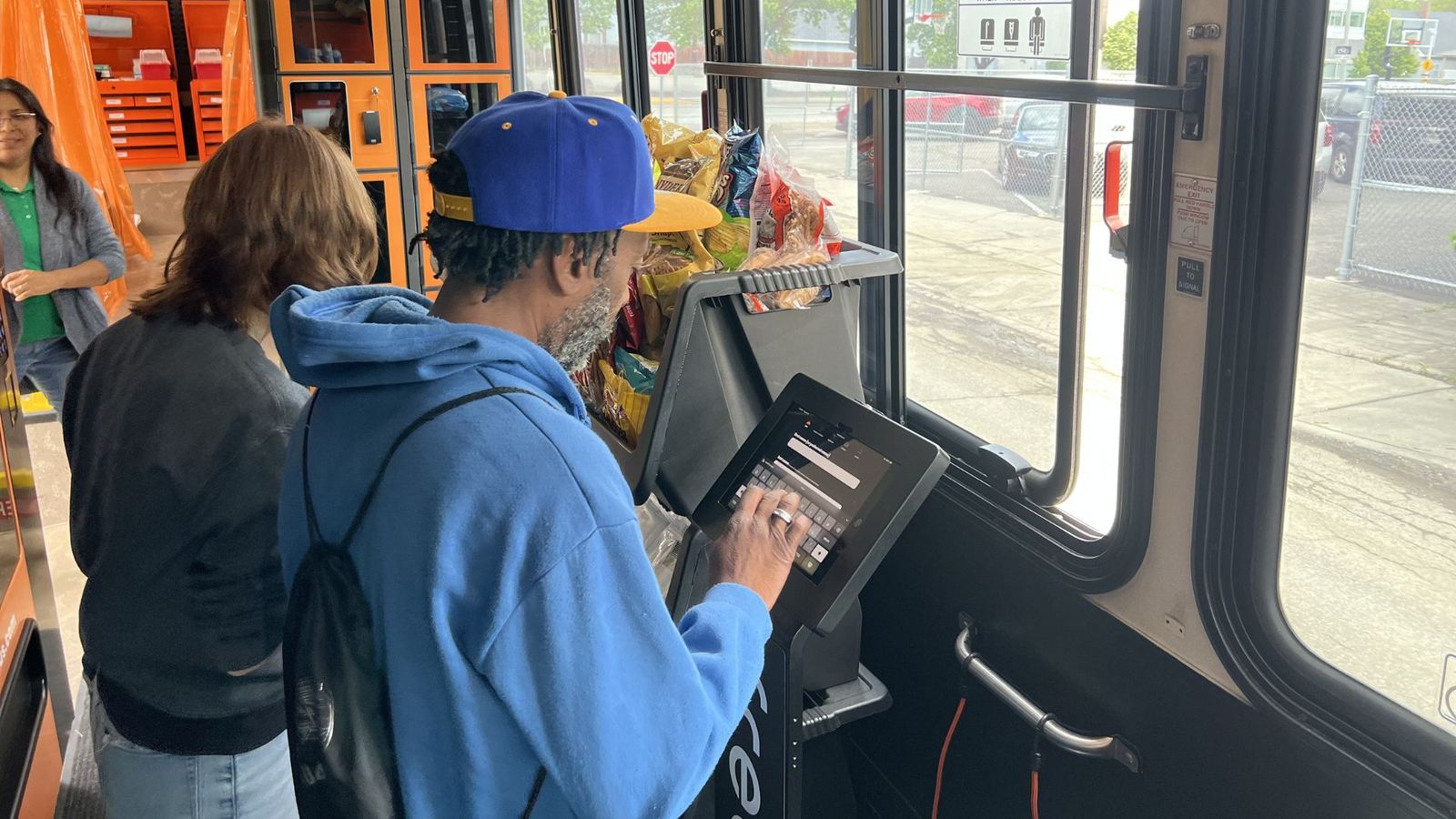
guests can access and continue their guidepath from their own device or through a guideflow kiosk located inside a trustee office, shelter, library, healthcare site, reentry center, community organization, or other trusted service location.
one clear process
guidepath replaces scattered instructions and disconnected systems with a guided, step-by-step experience.
fewer barriers
guests spend less time traveling between offices, waiting on hold, repeating information, or trying to determine which program can help.
clear expectations
guests can see what information is required, what documents have been received, and what still needs attention.
status visibility
applications and documents can be marked as missing, submitted, under review, approved, rejected, waived, or not legible.
continued communication
automated text and email updates help guests understand the status of their request and the next action required.
connected support
when one program cannot meet the need, guidepath can direct guests toward other relevant services and community resources.
streamlined intake
guidepath standardizes applications and helps staff receive more complete and usable information from the beginning.
simplified service delivery
the 10-step standard helps partners identify unnecessary complexity and redesign workflows around the people using them.
fewer administrative barriers
guided questions, document prompts, automated updates, and status tracking reduce avoidable calls, incomplete applications, and repeat visits.
configurable workflows
each guidepath flow can reflect the partner’s actual programs, requirements, review process, service area, and staffing structure.
transparent review
staff can quickly see application status, document quality, missing information, completed steps, and next actions.
coordinated referrals
partners can connect guests to internal programs and external resources without handing them another disconnected list of phone numbers.
actionable data
guidepath provides insight into requests, service demand, unmet needs, processing activity, referral patterns, completion rates, and outcomes.
guidepath does more than digitize an existing process.
it helps organizations redesign service delivery so people spend less time navigating systems and more time receiving support.
because help should never be harder to access than the problem itself.